Navat has always remained without a package that would attract more attention.
Services:
Packaging
Packaging
Client:
Noor
Noor
Year:
2023
2023

Concept
Nabat, novvot, navat or kinva-shakeri is a sweet made in Central Asia and Iran, and is the local equivalent of candy sugar. Nabat comes in the form of granulated sugar. It is produced from sugar syrup and grape juice. Nabat comes in a variety of colors, from white to brown. Produced using a traditional technique, nabat is widely available in Central Asian countries, where it can easily be found in local bazaars. Nabat is usually added to tea, but can also be used as an ordinary sugar or as a dessert in its own right. As a sweetener, nabat should be used with caution by diabetics. In large quantities, it also contributes to tooth decay and obesity.
Scope
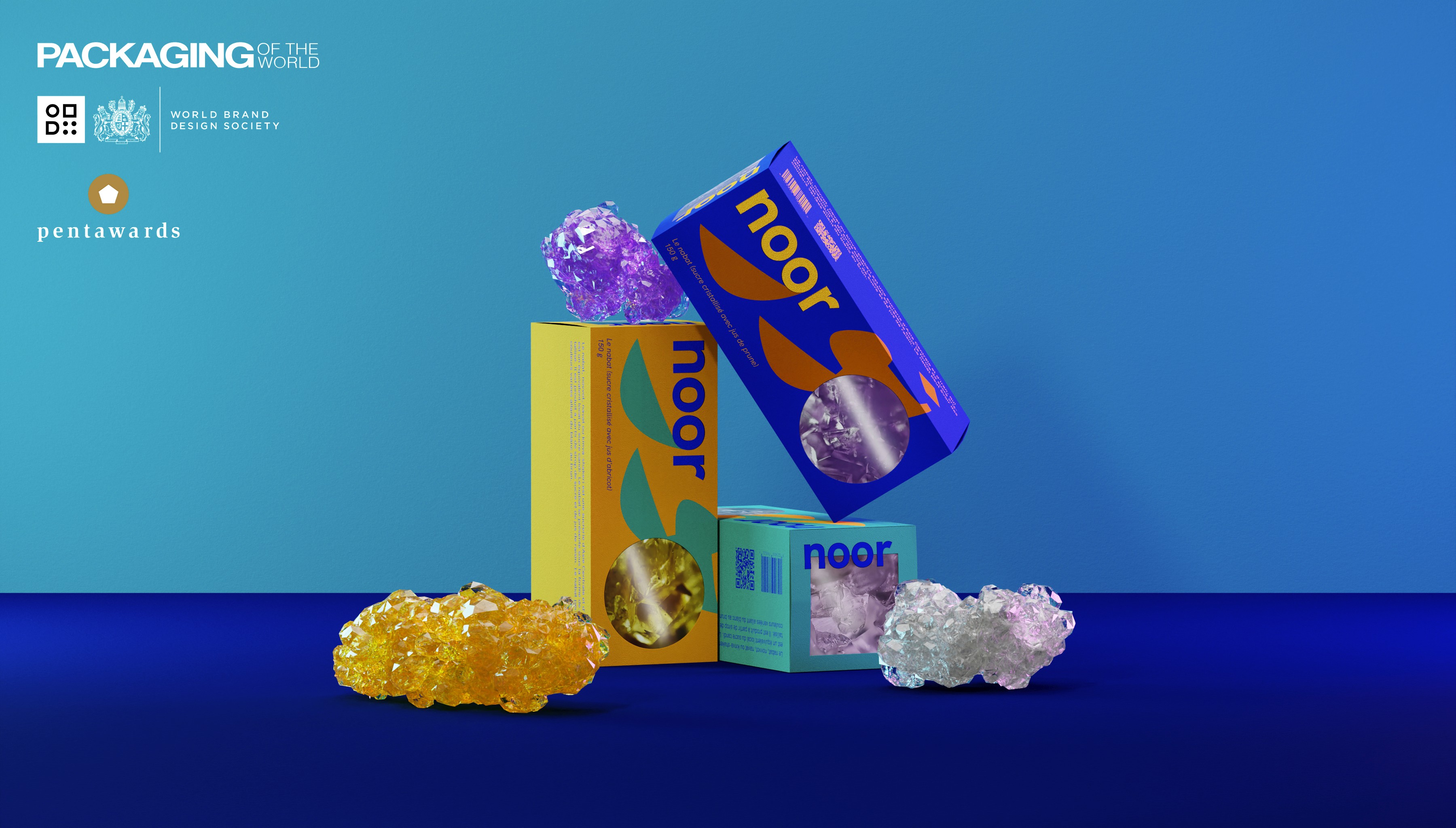
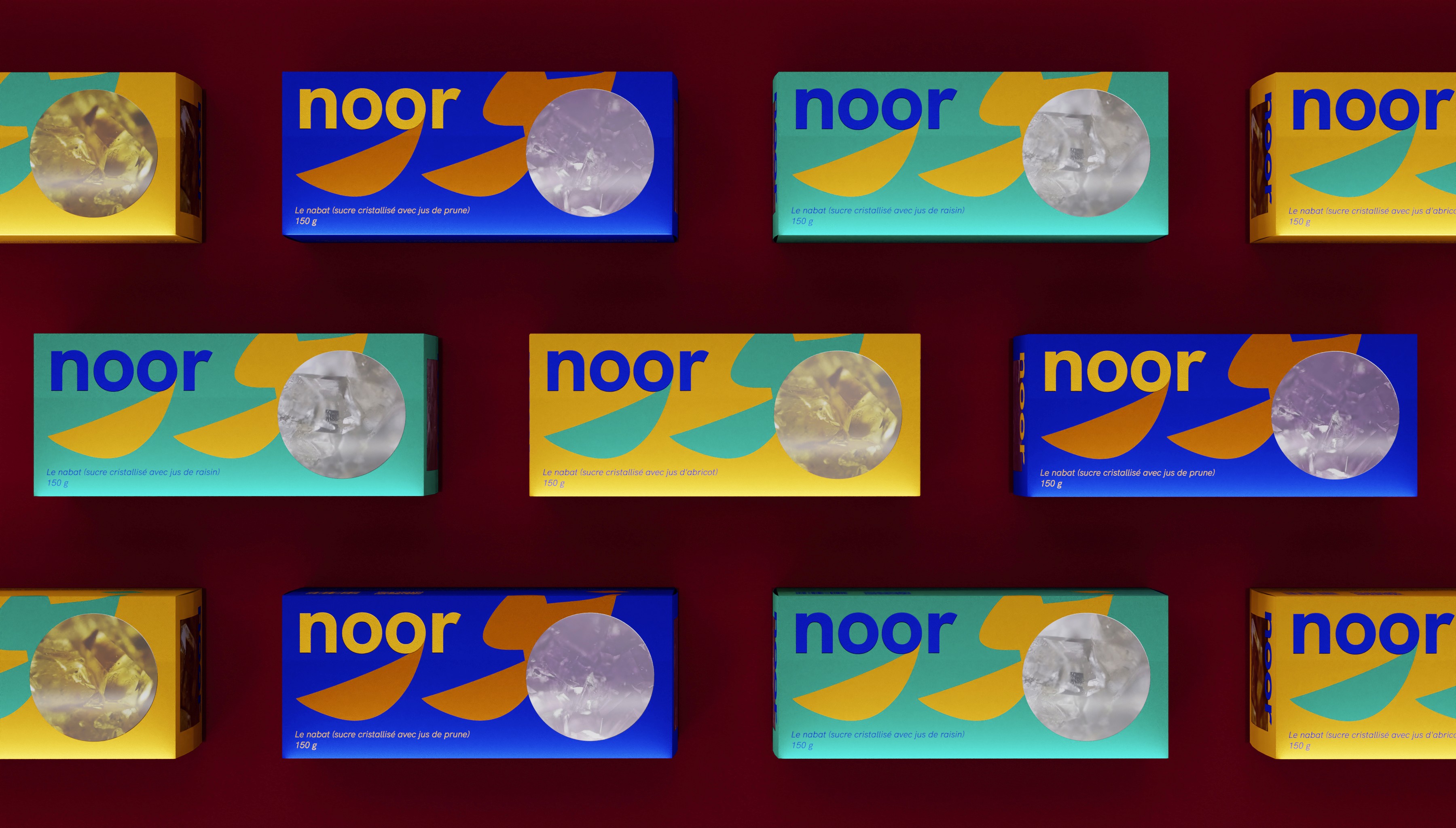
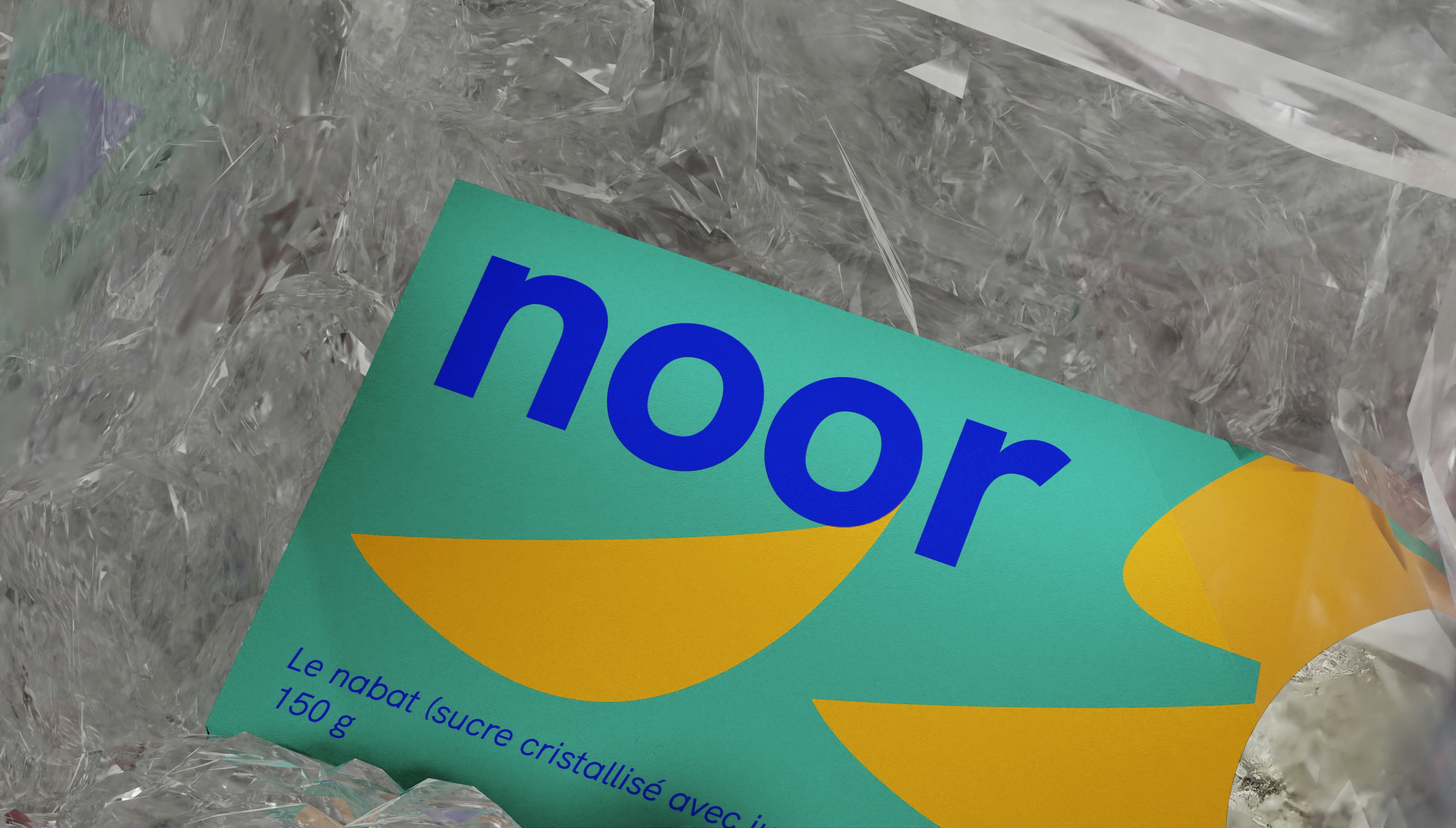
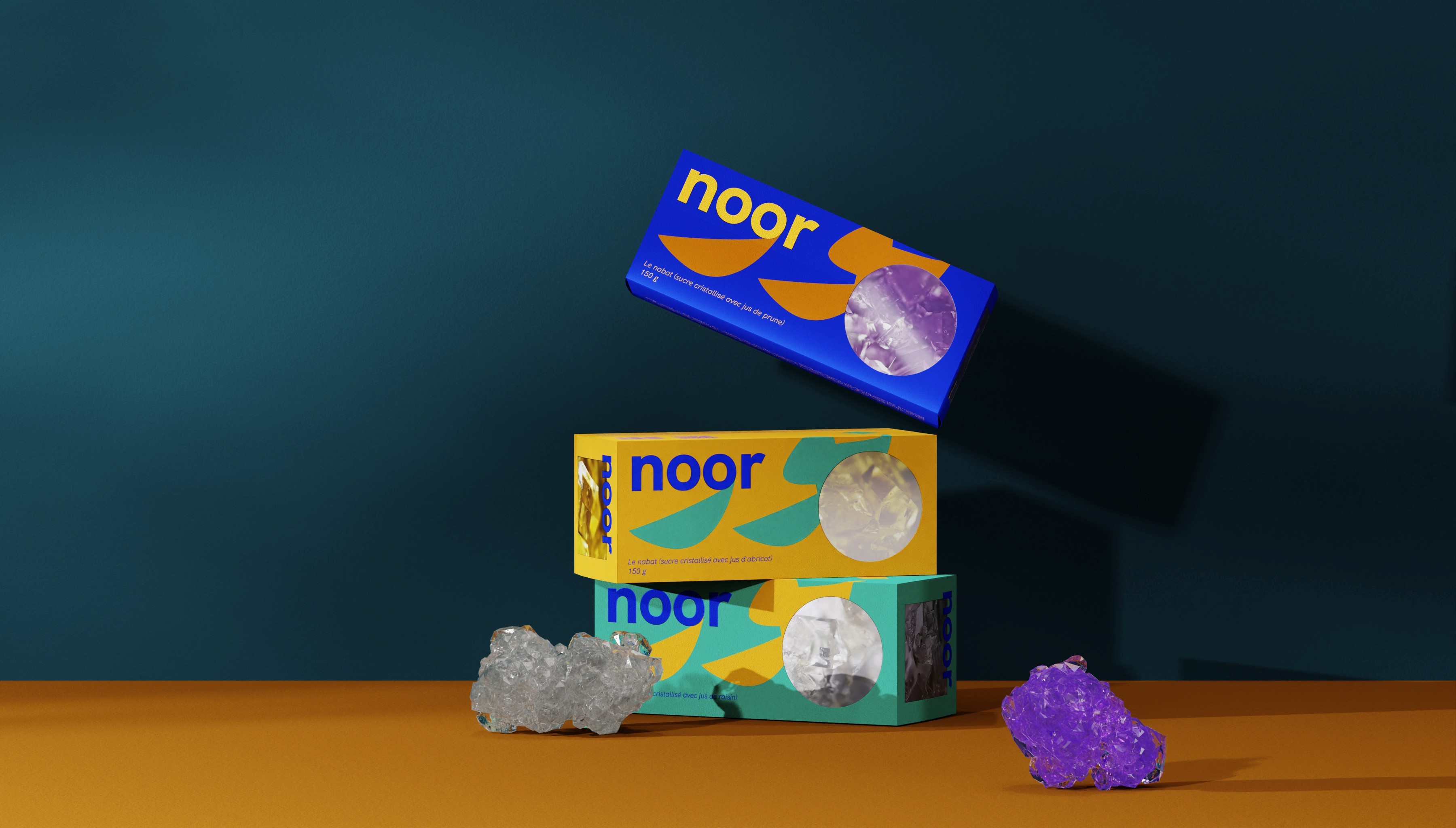
We came up with a packaging project specifically designed for export and aimed at a young audience. We chose the word “noor” as the name, which means light in both Uzbek and Persian. As an element of the identity we used the Persian spelling of the word, which is perceived as a pattern. In addition, one can see inside the geometric figures the pattern of navat under a microscope, which looks like a precious stone. Different colors are used to indicate the taste of navat: blue is plum, orange is apricot and so on.
Concept
Nabat, novvot, navat or kinva-shakeri is a sweet made in Central Asia and Iran, and is the local equivalent of candy sugar. Nabat comes in the form of granulated sugar. It is produced from sugar syrup and grape juice. Nabat comes in a variety of colors, from white to brown. Produced using a traditional technique, nabat is widely available in Central Asian countries, where it can easily be found in local bazaars. Nabat is usually added to tea, but can also be used as an ordinary sugar or as a dessert in its own right. As a sweetener, nabat should be used with caution by diabetics. In large quantities, it also contributes to tooth decay and obesity.
Scope
We came up with a packaging project specifically designed for export and aimed at a young audience. We chose the word “noor” as the name, which means light in both Uzbek and Persian. As an element of the identity we used the Persian spelling of the word, which is perceived as a pattern. In addition, one can see inside the geometric figures the pattern of navat under a microscope, which looks like a precious stone. Different colors are used to indicate the taste of navat: blue is plum, orange is apricot and so on.